CULTURE
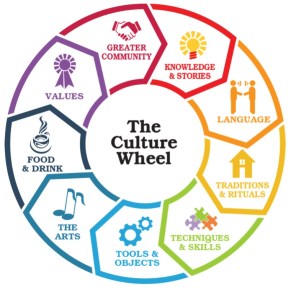
Culture is the characteristics and knowledge of a particular group of people, encompassing language, religion, cuisine, social habits, music and as shared patterns of behaviors and interactions, cognitive constructs and understanding that are learned by socialization.
«Culture encompasses religion, food, what we wear, how we wear it, our language, marriage, music, what we believe is right or wrong, how we sit at the table, how we greet visitors, how we behave with loved ones and a million other things,» Cristina De Rossi.
If you ask 100 anthropologists to define culture, you’ll get 100 different definitions. However, most of these definitions would emphasize roughly the same things: that culture is shared, transmitted through learning and helps shape behavior and beliefs. Culture is of concern to all four subfields and while our earliest ancestors relied more on biological adaptation, culture now shapes humanity to a much larger extent.
Most individuals are members of multiple cultural worlds. Culture exists at several levels. We typically refer to smaller cultures within a larger culture as subcultures. People have some type of connection to that subculture but must also be able to operate effectively within the larger culture. Some of the diversity we see across subcultures is based on class, race, ethnicity, age, and gender. Social stratification is often the result of our recognition of these worlds as different and a belief that they are somehow inferior to our own or to the larger culture.
IDENTITY
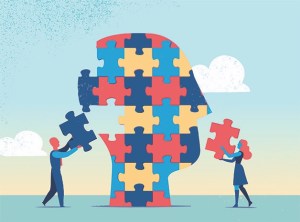
Personality traits, abilities, likes and dislikes, your belief system or moral code, and the things that motivate you — these all contribute to self-image or your unique identity as a person. People who can easily describe these aspects of their identity typically have a fairly strong sense of who they are.
Identity work in occupations and organizations consists of the cognitive, discursive, physical, and behavioral activities that individuals undertake with the goal of forming, repairing, maintaining, strengthening, revising, or rejecting collective, role, and personal self-meanings within the boundaries of their social
Identity is the fact of being who or what a person or thing is
This are some of elements that made up a culture and identity:
Class is a social category based on people’s economic position in society. Class societies are hierarchical, with one class having more access to resources than others. Class is a recent feature of culture, as all early humans lived in egalitarian bands or tribes.
Race (in a cultural sense) is the socially constructed meanings assigned to the perceived differences between people based on physical traits (skin color, facial features, hair types).
Ethnic group refers to people who identify themselves as a distinct group based
on cultural features such as common origins, language, customs and beliefs.
Indigenous peoples, «are groups who have a long-standing connection with some territory that predates colonial or outside societies prevailing in the territory.» Indigenous peoples are groups that were in a territory before Europeans or colonists arrived, thus Native Americans are an indigenous group.
Gender refers to the cultural meanings assigned to the biological differences
between the sexes. Most societies only have masculine or feminine cultural roles, but some have a third, or even a blended, gender.
Age is both a biological fact as well as being culturally constructed. While we can
reckon how many years old an individual is (biological age), what that means in terms of rights and responsibilities is culturally constructed.
So we can say that culture and identity are very relate, because one make possible the other one. It has the same characteristics as the other one, culture is a part of our identity, is determining who is each person.
Resources:
https://nideffer.net/classes/GCT_RPI_S14/readings/Chap8CharacteristicsofCulture.htm
 Título del sitio